
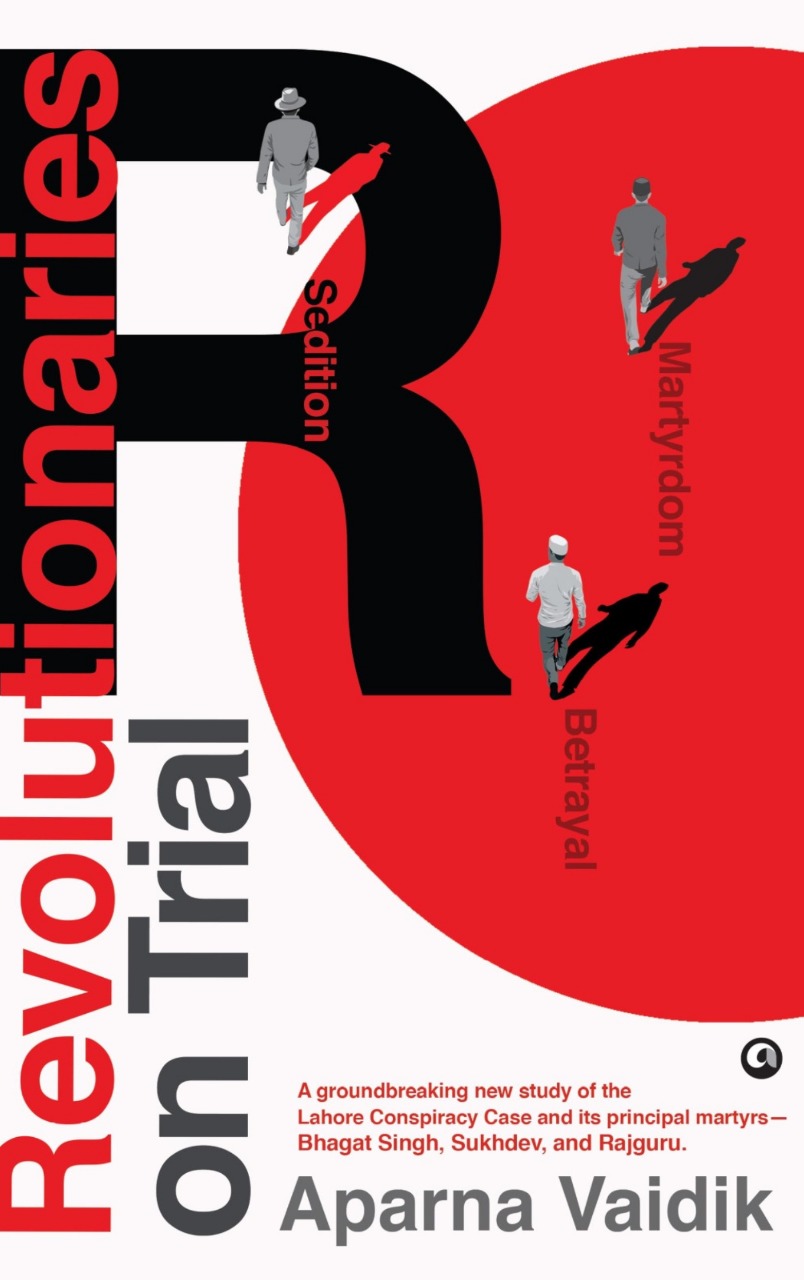
Revolutionaries on Trial
- APARNA VAIDIK
- RELEASE YEAR: 2024
- PUBLISHER: ALEPH BOOK COMPANY
Revolutionaries on Trial by Aparna Vaidik is a powerful and deeply researched account of the infamous Lahore Conspiracy Case, which led to the execution of Bhagat Singh, Sukhdev, and Rajguru.
Far from being just a miscarriage of justice, this book re-examines the trial as a multi-layered event involving not just the colonial state and the revolutionaries, but also prosecution witnesses and the Indian public and press as active participants.
Held in Lahore from July 1929, the trial culminated in October 1930 with death sentences for the three young revolutionaries. Drawing on rare archival material from India and Pakistan, oral histories, letters, and newspapers, the book reveals how the courtroom became a stage for larger political performances, public opinion battles, and a contest of ideologies.
The author asks bold questions: Why did the colonial state bother with a trial when it had violent means at hand? Were these trials about justice or appearances? She also explores uncomfortable truths about collaboration, betrayal, and the blurred lines between nationalism and complicity.
By examining the law’s role as both shield and weapon, Revolutionaries on Trial challenges the standard view of colonial legal history. It argues that sedition trials were not simply legal procedures, but theatrical displays meant to legitimise state power while revolutionaries, far from being mere victims, used these trials to amplify their message across India.
Crisp, provocative, and essential reading, this book redefines how we understand one of the most iconic episodes in India’s freedom struggle.
