
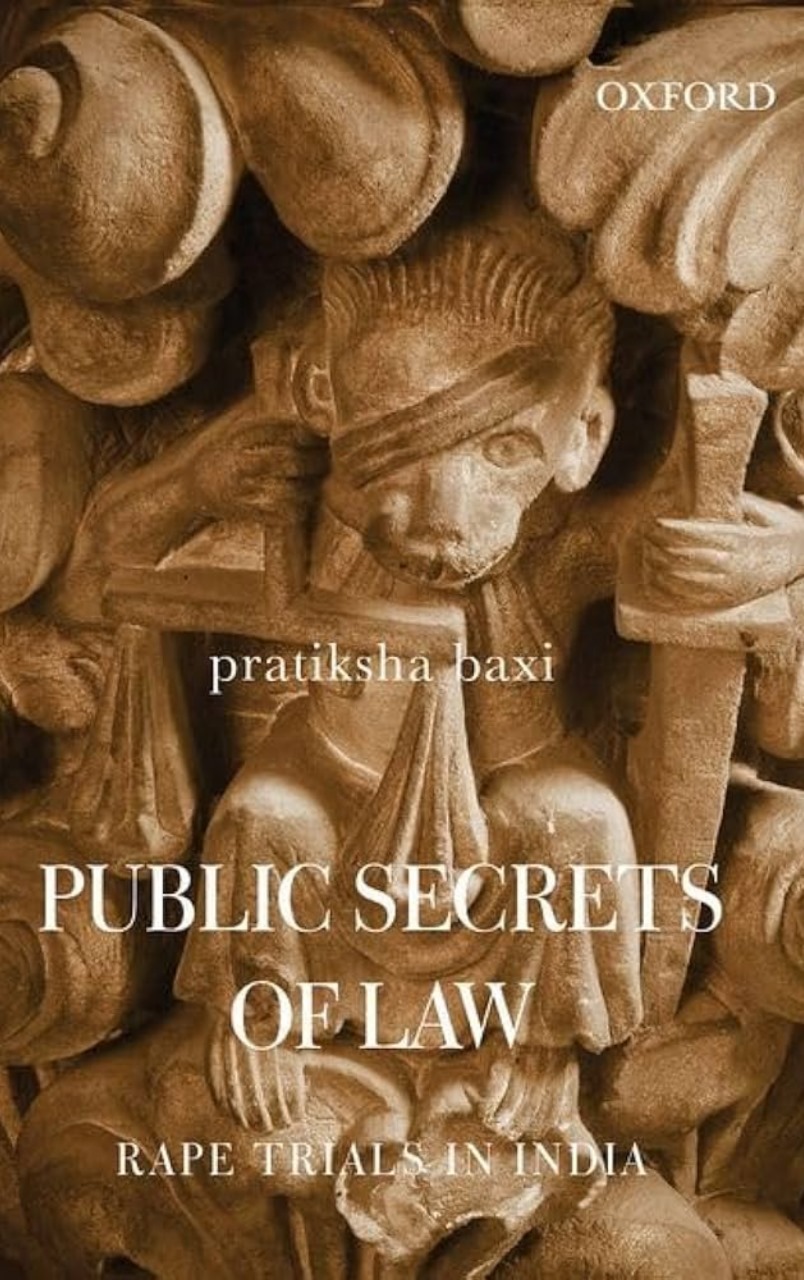
Public Secrets of Law
- BY PRATIKSHA BAXI
- RELEASE YEAR: 2014
- PUBLISHER: OXFORD UNIVERSITY PRESS
Dr. Pratiksha Baxi, a sociologist, feminist legal scholar and a current faculty at the Centre for Study of Law and Governance in JNU, presents a detailed ethnographic account of the rape trials conducted in the state of Gujarat particularly in the trial courts of Ahmedabad.
A public secret refers to those phenomena which are known to everyone but are difficult to articulate. Dr. Baxi through this study, reveals how the interplay of law and public secrets reduce rape trials in India to pornographic spectacles where the female victim’s body is viewed through a sexual gazed, making the rape trials a further traumatic experience compounding that of the crime itself.
Through case-studies and erudite incisive analysis, the book discusses important themes such as indignities inflicted by spoken law, consent in medico-legal jurisprudence, position of minor victims in rape trials , compromise in rape trials and rape as an atrocity revealing various avatars of the phallocentric constructions of the law. (I.e. male-ness of the law)
Dr. Baxi differentiates between written law and spoken law and highlights the violence inflicted by the spoken law on the rape victims by making rape trials a humiliating experience. The process may not provide justice to the victims but definitely adds to their trauma. She laments the omission of considering this aspect in law reforms.
Dr. Baxi further highlights how Medico-legal literature and evidence in rape trials is used to dispense with the traumatic experience of rape but makes the female body speak of the crime. Such a scenario is then used to dispute the veracity of victim with an attempt to prove consent as against rape. This interplay of medical science and law reveals another harrowing dimension of the male-centric constructions of law governing rape trials.
Minor victims have a particularly despicable experience in rape trials. They first have to explain their trauma and body in adult terms but when they do so, their very child-ness is put on trial wherein their innocence is disputed, further adding to their trauma. The child is thus forced to be an adult but also remain a child at the same time.
Compromise in rape cases, though illegal, is not an unusual phenomenon in India. Dr. Baxi shows how factors such as social stigma, caste, family honour play a role in reaching a compromise between the victim and the perpetrators. Two types of cases are discussed i.e. where rape cases are compromised and secondly when consensual relationships are weaponised into criminal cases. All this is done to maintain the patriarchal hold over the female sexuality, disregarding the trauma inflicted on them.
In the final chapter, Dr. Baxi highlights how despite the enactment of SC and ST Prevention of Atrocities Act, the judges still misinterpret cases of sexual violence against Dalits and tribal communities as individualised crimes when they are in-fact atrocities against the community. Moreover, many times the victims and complaints are seen as liars seeking to gain compensation under the Prevention of Atrocities Act by filing false cases.
The above is but a shallow description of the detailed painstaking work of hard labour encapsulated in the book.
This book makes the reader confront harsh realities and ugly truths which deeply disturb and disgust. I personally had sleepless nights especially when reading the chapter on the horrors which minor victims undergo during their trials. This only adds to why this book is a pertinent read, nay, a compulsory read for not only lawyers, judges and sociologists but for every individual in this country.
