
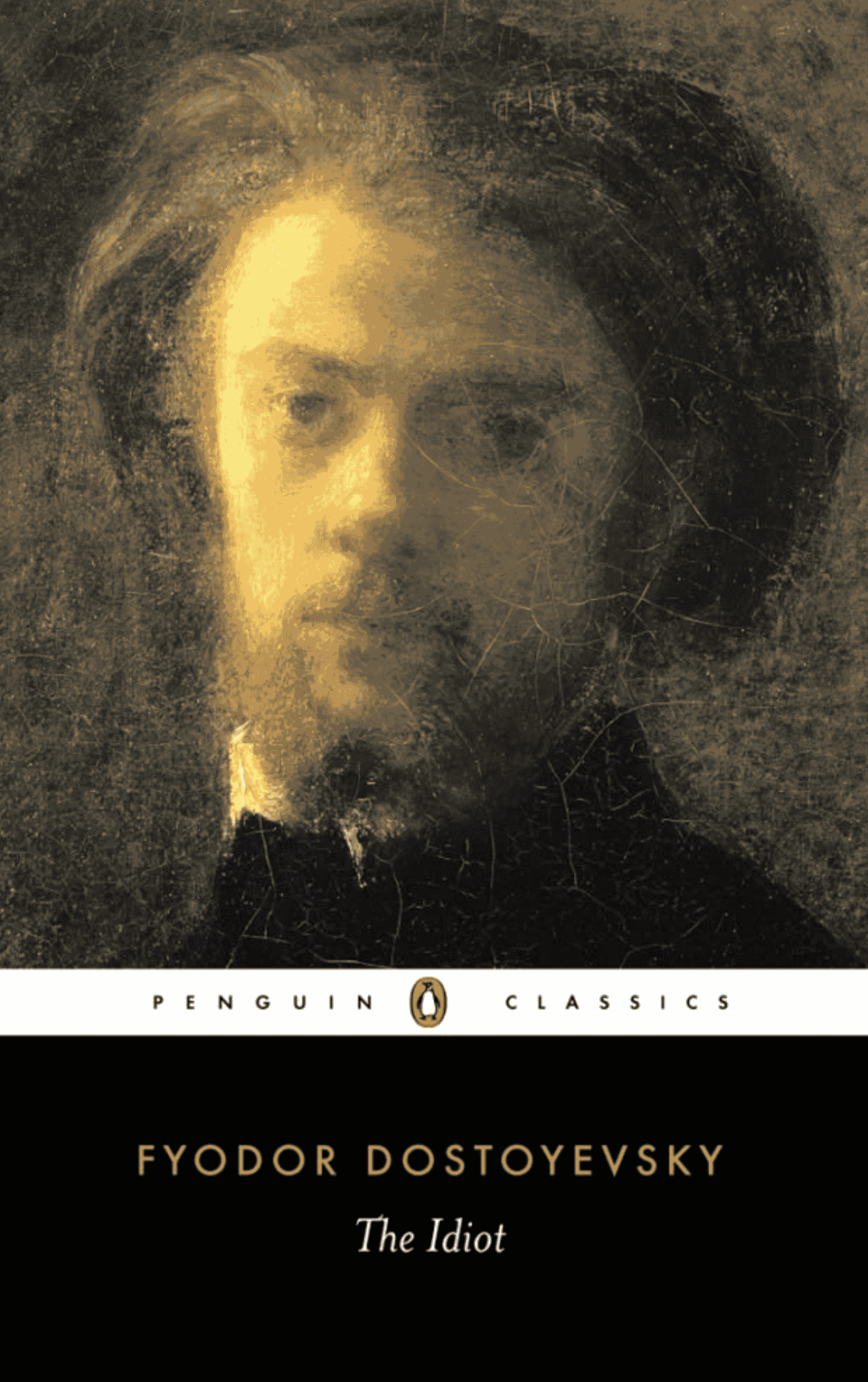
The Idiot
- FYODOR DOSTOYEVSKY
- 1869
- PUBLISHER: PENGUIN CLASSICS
Review by: Vanshika Tyagi
I genuinely don't know how to explain The Idiot without making it sound completely chaotic, because honestly, it kind of is.
This is a book about love, pride, money, social expectations, and people making spectacularly bad decisions, and somehow Dostoevsky makes you watch the disaster unfold for hundreds of pages while knowing you probably won’t survive emotionally.
The story is slow. Like, really slow. There are endless conversations, arguments, social gatherings, romantic confusion, money problems and misunderstandings.
There were definitely moments when I wanted to tell Dostoevsky, “Okay, we get it, please move on.” But somehow, I was still invested. Slowly, all these seemingly separate relationships start becoming tangled together, and you realise that love, jealousy, pride, insecurity and reputation are all pushing the story towards something much darker.
The characters are a huge reason I stayed so invested. I absolutely loved the Epanchin family, especially Lizaveta Prokofyevna. Her rants, dramatic reactions and complete lack of a filter were genuinely some of my favourite parts of the book. Nastasya Filippovna was fascinating in a completely different way. Her story is painful and messy, and even when I wanted to yell at her for her decisions, I understood why she was making them.
Then there’s Prince Myshkin, who is basically the heart of the entire disaster. What I found most interesting is that the novel keeps asking whether being genuinely good automatically makes you foolish. Everyone calls him an idiot, but he is clearly not stupid. He understands people extremely well; he just doesn’t seem interested in playing the selfish games everyone else is playing. His compassion is almost impossible for the people around him to understand, and honestly, that is what makes his story so heartbreaking.
Also, I did not expect this book to be funny. Some scenes genuinely felt like watching the world’s most chaotic group chat, except everyone is emotionally unstable and nobody can simply mute the conversation. My biggest issue was definitely the digressions and ridiculously long speeches that tested my patience, especially Ippolit’s section. There were moments when I genuinely wondered why I was reading five pages about something that seemed completely unrelated. Sometimes it pays off later; sometimes I was still wondering what the point was. But weirdly, the messiness fits the story.
By the final stretch, I was genuinely scared to keep reading. You can feel something awful coming, but you keep hoping that somehow everyone will make the right choice this time. They don’t. The ending absolutely destroyed me, and what makes it worse is that it doesn’t feel random. Looking back, the whole novel feels like it was quietly moving towards that exact moment. So I loved the chaos, the relationships and the way Dostoevsky makes you care about people who are constantly making terrible decisions.
I don’t think I’ve completely understood The Idiot yet, and honestly, that’s probably why I want to read it again. Not because I missed the story, but because now that I know where everything ends, I want to go back and notice all the things I didn’t catch the first time.
So yes, I have complaints. I also loved it. And yes, Dostoevsky absolutely owes me emotional compensation.
